
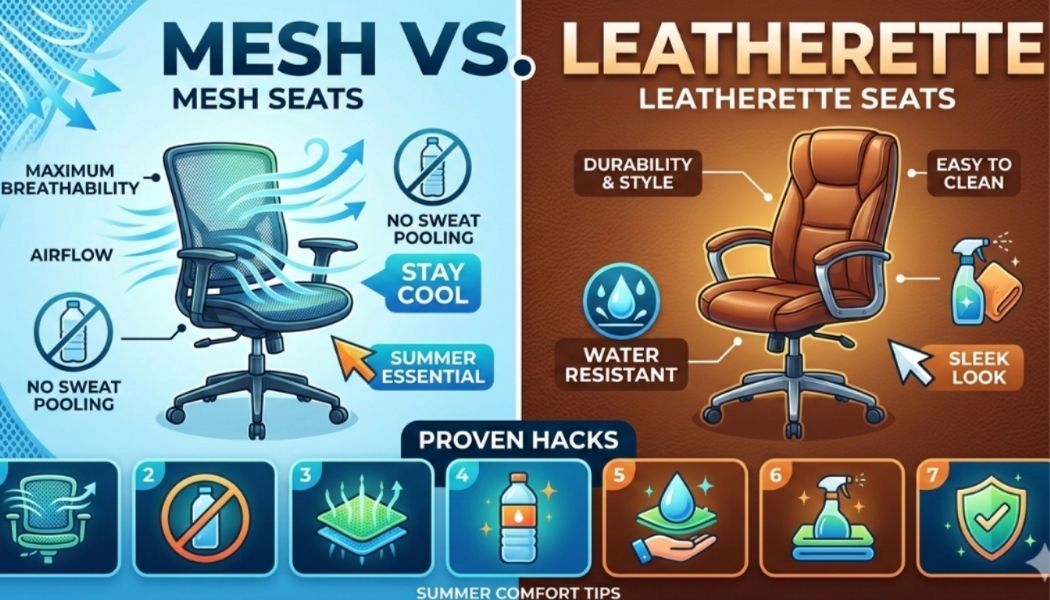
Mesh vs. Leatherette: 7 Proven Hacks to Save Your Sweaty Summer Seats

Mesh vs Leatherette: 7 Hacks to Save Your Sweaty Summer Seat

As India enters another intense summer marked by extreme heat, the balance between seating comfort and material maintenance becomes critical. Whether you’re working from an office or a home studio, the material of your chair directly affects both physical comfort and long-term durability. 

The Mesh vs. Leatherette decision is more than a visual preference; it impacts skin comfort, hygiene, and material lifespan.

With humidity levels climbing toward 90% and temperatures crossing 45°C in many regions, upholstery is exposed to harsh environmental stress. Fine dust, perspiration, and everyday spills accelerate wear. 

This guide examines the material science behind both options and outlines practical cleaning strategies to help you maintain comfort and extend the life of your chair.

Why the Choice of Mesh vs. Leatherette Matters in 40°C Heat

Before we scrub, we must understand the “why.” Indian summers are notorious for two things: fine dust (particulate matter) and heavy perspiration.

  • Mesh is the king of breathability. It allows for multi-directional airflow, preventing the dreaded “back sweat.” However, its porous nature makes it a magnet for skin flakes and microscopic dust.
  • Leatherette (synthetic leather/PU) delivers a sleek, executive aesthetic and naturally resists spills due to its non-porous surface. However, in peak summer conditions, especially in cities like Delhi or Mumbai, it can retain heat quickly, making the seat feel uncomfortably warm without adequate air conditioning.

The Physics of Summer Wear and Tear

Sitting for extended periods transfers continuous body heat and pressure to the chair’s surface. In the Mesh vs. Leatherette comparison, mesh allows heat to escape through airflow, improving thermal regulation. 

Leatherette, being non-breathable and compact, traps heat against the surface. Over time, perspiration, particularly the salt content, can weaken the synthetic polymer layer of leatherette, causing it to dry out, stiffen, and eventually crack in hot climates.
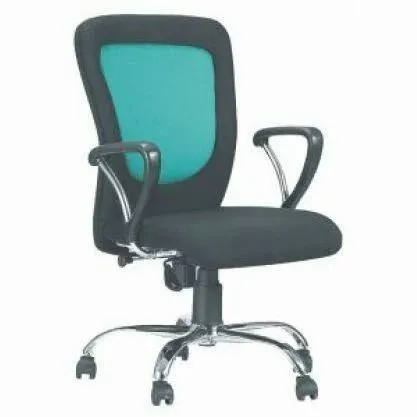
Mesh chair

The 2026 Durability Factor: Sag vs. Stretch

Beyond temperature, the Indian climate affects the structural “memory” of these materials:

  • Mesh Resilience: In high-humidity zones like Chennai or Kolkata, standard mesh can lose its tension, leading to “sagging.” For 2026, we recommend Elastomeric Mesh, which maintains its shape even when saturated with moisture.
  • Leatherette Puddling: High heat makes synthetic polymers more pliable. Under heavy usage in non-AC rooms, leatherette may develop “puddling” (permanent ripples). If you notice this, it’s a sign the material is overheating and needs a cooling break.

Mesh vs. Leatherette: Cleaning the Breathable Champion

Deep Cleaning Mesh to Eliminate Trapped Dust

Mesh is essentially a high-tension net. While it keeps you cool, it catches everything else, from dead skin cells to environmental pollutants common in Indian metros.

  • Hack #1: Dry Vacuum First
    Start with dry vacuuming using a soft-brush attachment on the mesh. This removes loose dirt before any moisture. Adding water too soon can push grime deeper and cause stains.      
  • 2026 Tech Tip: If you run an HEPA Air Purifier in your home office, place it within 3 feet of your Mesh chair. It will capture skin flakes and microscopic dust before they settle into the mesh weave, cutting your vacuuming time by 50%.
  • Hack #6: Soapy Microfiber Blot
    Dip a microfiber cloth in mild soapy water, wring it thoroughly, and gently blot the stains. Skip scrubbing to avoid damaging the delicate mesh.
  • Targeted Compressed Air Cleaning (Hack #3): Use brief, focused bursts of compressed air along seams, edges, and where the mesh meets the frame to dislodge dust and crumbs. This technique clears debris without scrubbing, reducing wear on the fabric.

Dealing with Sweat Stains on Mesh

Sweat leaves behind salt and oils. If left untreated, the mesh will stiffen, lose its elasticity, and eventually sag.

  • Hack #4: Mesh Odor Fix– Neutralize odors and kill bacteria on synthetic mesh by mixing one part white vinegar with four parts water, spray or wipe on for a fresh reset.
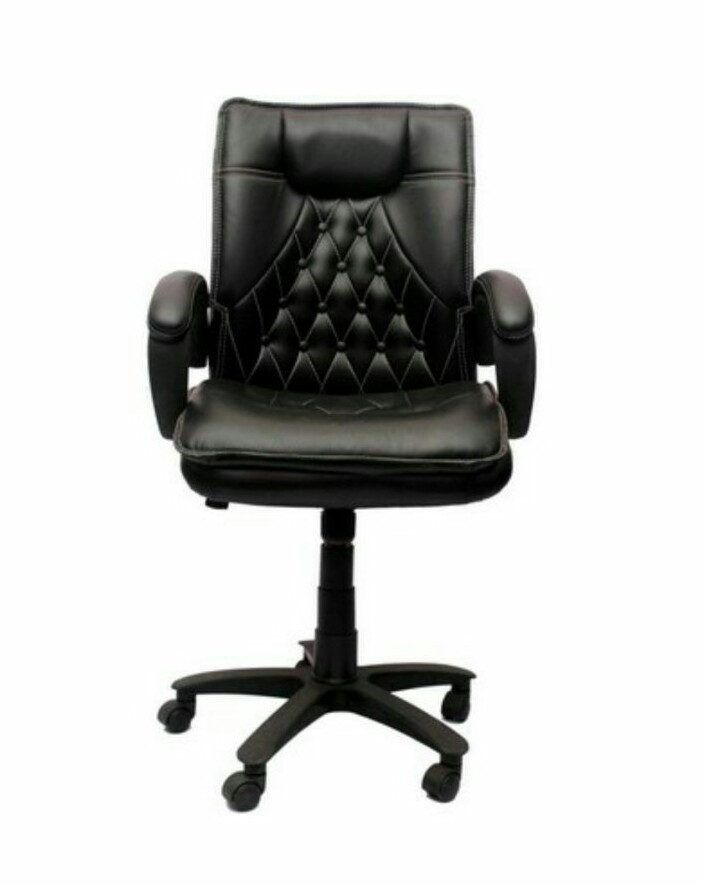
Leather Chair

Mesh vs. Leatherette: Maintaining the Sleek Sophistication

Protecting Leatherette from Summer Cracking

Leatherette’s biggest enemy in India isn’t just heat, it is the UV rays coming through your window and the salt from your skin reacting with the Polyurethane (PU) layer.

  1. The Gentle Daily Wipe: Since leatherette is non-porous, it doesn’t trap debris like mesh. A quick daily wipe with a soft, dry cloth prevents abrasive dust from accumulating on the surface and dulling the finish.
  2. Hack #5: Mild Soap Cleaning– Avoid bleach or harsh cleaners that strip the mesh’s protective layer. Mix one drop of gentle dish soap in a liter of water, then softly wipe with a cloth.
  3. The Cornstarch Shield (Hack #2): Lightly dusting leatherette with cornstarch during a heatwave absorbs excess skin oils and prevents that “sticky thigh” syndrome where you feel glued to your seat.

Removing “Sticky” Residue from Leatherette

In high humidity (like during the Monsoon transition), leatherette can feel tacky or gummy.

  • The Solution: Wipe the surface with a cloth lightly dampened in the diluted vinegar solution to dissolve the oily residue. Then immediately follow up with a dry microfiber cloth to buff the area and restore a clean, smooth finish.

Pro-Tips for the Indian Climate

The Sunscreen Warning for Mesh vs. Leatherette

In 2026, sun protection is a must even indoors. However, the chemical filters in your sunscreen (like Avobenzone) can react negatively with furniture materials.

  • Hack #7: Chair Guard– After applying lotion or sunscreen, drape a lightweight cotton cloth over your seat. This shields leatherette and mesh from sticky residue buildup.
Quick Reference Table for Mesh vs. Leatherette Care
FeatureMesh CleaningLeatherette Cleaning
Primary ToolVacuum Cleaner (Brush)Microfiber Cloth
Cleaning AgentDiluted Vinegar/Mild SoappH-Neutral Soap
Drying TimeSlow (requires airflow)Instant / Rapid
Summer RiskDust & Odor buildupCracking & Peeling
Pro TipBlotting onlyCornstarch for stickiness

The Science of Material Longevity

To truly master the Mesh vs. Leatherette maintenance game, we must look at the polymers. Most mesh is made of polyester or nylon, which are hydrophilic, meaning they can hold onto moisture from the air. In an Indian monsoon following a hot summer, this leads to mold if the room isn’t ventilated.

Leatherette is usually a layer of PU (Polyurethane) over a fabric backing. Heat causes the plasticizers in the PU to migrate to the surface and evaporate. Once these plasticizers are gone, the material becomes brittle. 

This is why “conditioning” leatherette with water-based UV protectants is vital in the harsh months of May and June.

The 30-Second Verdict: Which One Wins Your Space?

If your workspace is…Your Best MatchThe “Why”
Naturally Ventilated (Fan only)High-Airflow Mesh100% Breathability; prevents “back-sweat” spikes.
Full-time Air ConditionedPremium LeatheretteRetains a cool touch and offers a high-end executive feel.
High Dust/Construction ZoneLeatheretteMuch easier to wipe away the “Red Sand” dust common in NCR.
Pet-Friendly Home OfficeMeshLeatherette is prone to claw punctures; Mesh hides micro-scratches better.

Making the Right Choice for Your Space

In the grand debate of Mesh vs. Leatherette, the winner depends entirely on your specific environment. If you work in a non-AC room or a space with high natural humidity like Kolkata, Chennai, or Mumbai, Mesh is your biological savior, provided you own a good vacuum tomanage the dust. 

If you operate in a temperature-controlled office in Bangalore or Delhi and value a spill-proof, executive aesthetic, Leatherette is the way to go, just keep it conditioned to avoid the summer crack.

Proper maintenance doesn’t just keep your office looking professional; it extends the life of your investment by years. Take ten minutes this weekend to give your throne the TLC it deserves using these 7 hacks.

Upgrade to UV-Resistant Leatherette or High-Airflow Mesh Chairs for Ultimate Comfort. Not sure which material fits your office environment? Our experts are ready to help you choose the perfect throne for the Indian heat.

Contact us today at Angel Mastergrain Furniture 

Frequently Asked Questions (FAQs)-

1. Which is easier to clean, Mesh vs. Leatherette? 

Leatherette is generally easier to clean after spills, as it is non-porous. Mesh requires more mechanical effort (vacuuming) to remove deep-seated dust and skin cells trapped in the weave.

2. Does Leatherette peel faster in Indian summers? 

Yes. The combination of intense UV exposure and salt from human sweat breaks down the synthetic polymers. Regular cleaning with a pH-neutral solution is the only way to prevent this chemical degradation.

3. Can I use a hair dryer to dry my Mesh chair after cleaning? 

No. Highly concentrated heat can melt or warp the mesh’s synthetic fibers. Always air-dry naturally or use a pedestal fan to circulate air through the weave.

4. How do I get rid of the “old sweat” smell in a Mesh chair? 

Apply the Vinegar Neutralizer (Hack #4), or lightly spray the mesh with a solution of water and a small pinch of baking soda. Allow it to rest for about 30 minutes so the odor-neutralizing agents can work, then vacuum thoroughly to remove any residue.

5. Is there a way to prevent my skin from sticking to Leatherette during a heatwave? 

The Cornstarch Shield (Hack #2) is a highly effective DIY method to manage surface friction. Alternatively, using a “Cooling Gel Seat Cover” or a thin, premium cotton throw provides a breathable, moisture-wicking barrier that prevents the material from sticking to your skin, ensuring a smooth and comfortable seating experience even in peak humidity.

Know the Signs: Is Your Chair Beyond a “Hack”?

Sometimes, even the best cleaning routine can’t save a chair that has reached the end of its lifecycle. Watch for these 2026 “Red Flags”:

  • For Mesh: Look for “Pilling” (small fiber balls) or fraying edges. This means the structural integrity of the weave is compromised, and it will soon lose its ergonomic support.
  • For Leatherette: Look for “Micro-cracking” (fine white lines in the creases). This indicates the plasticizers have evaporated. Once these appear, peeling is inevitable within 3 to 6 months.
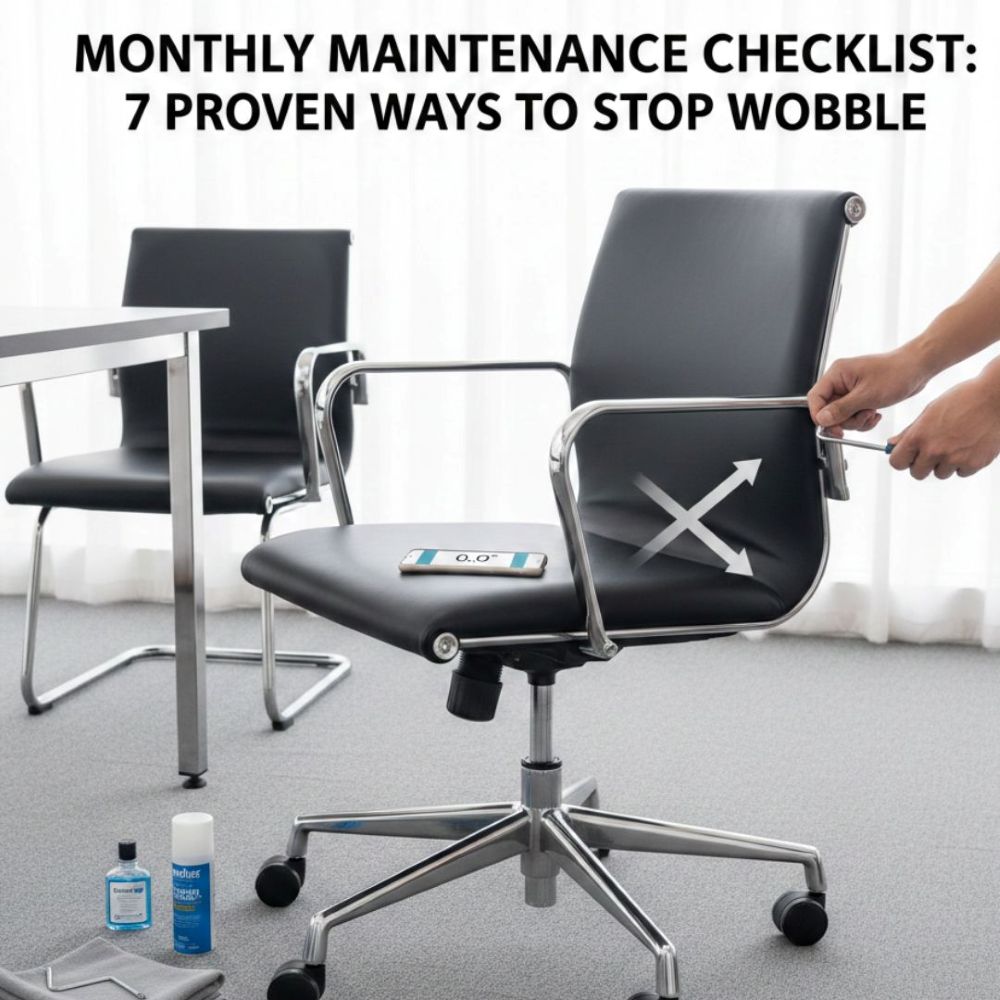
Monthly Maintenance Checklist: 7 Proven Ways to Stop Wobble

Monthly Maintenance Checklist: 7 Proven Ways to Stop Wobble

In the fast-paced corporate environments of India’s major commercial hubs, the furniture we use is often the silent partner in our success. 

From the high-stakes boardroom to the focused individual workstation, the quality of your seating directly impacts your physical health and mental focus. However, a common enemy lurks in every office: the “wobble.” 

Whether you are sitting in a premium executive chair or a heavy-duty stainless steel (SS) visitor chair from Angel Mastergrain Furniture, mechanical components are subject to the laws of physics. 

Over time, friction, gravity, and constant movement take their toll. To combat this, a rigorous Monthly maintenance checklist is not just a suggestion; it is a necessity for professional longevity.

Trusted by corporate offices across India, Angel Mastergrain Furniture is engineered for peak performance. Routine maintenance extends the structural integrity of high-tensile fasteners and reinforced SS frames, a design standard we prioritize at Angel Mastergrain Furniture.

To keep your seating fleet in top condition, ensure your Monthly maintenance checklist kit includes:

  • Hex Key Set: 4mm, 5mm, and 6mm (Standard for our Executive and SS ranges).
  • Thread-Locking Fluid: Medium-strength (blue) for high-traffic visitor chairs.
  • Silicone Lubricant: Spray or white lithium grease (Avoid WD-40 for long-term internal use).
  • Digital Level: A smartphone app to ensure table and chair alignment.
  • Microfiber Cloth: For maintaining the chrome and stainless steel finish.

Why a Monthly Maintenance Checklist is Essential for Furniture Longevity

Stability is the hallmark of quality furniture. When you first invest in an Angel Mastergrain product, the joints are tight, the gas lifts are pressurized, and the frames are perfectly aligned.

However, daily use involves hundreds of micro-adjustments as you shift your weight, lean back, or move across the floor. 

These movements create vibrations that gradually loosen fasteners. By committing to a Monthly maintenance checklist, you are performing preventative care that stops minor “play” from becoming a major structural failure.

Mesh Chair

In the long run, this habit saves money. Replacing a bolt is inexpensive; replacing an entire SS sofa because the frame warped due to loose joints is an avoidable capital expense. 

Furthermore, a stable chair is an ergonomic chair. A wobble, even a slight one, forces your core muscles to constantly compensate to keep you upright. This leads to premature fatigue, lower back pain, and a decrease in overall productivity.

7 Proven Ways to Execute Your Monthly Maintenance Checklist

To truly eliminate instability, your routine needs to follow specific technical methods. 

Here are the seven “Anti-Wobble” secrets that professionals use to keep furniture in showroom condition:

Why Hardware Matters: Angel Mastergrain vs. Generic Brands

Not all “wobbles” are created equal. Many low-grade office chairs use soft-lead bolts that “strip” the moment you apply torque. At Angel Mastergrain Furniture, we use reinforced high-tensile fasteners and precision-threaded SS inserts.

Our hardware is built to withstand repeated adjustments, meaning your Monthly maintenance checklist actually works rather than stripping the screws.

Way 1: The Diagonal Torque Technique (The X-Pattern)

When tightening the four main bolts under an executive chair seat, never tighten them in a circle. This causes the metal plate to tilt slightly to one side, creating a permanent wobble.

Always tighten in an “X” pattern (top-right, then bottom-left, etc.). This ensures even pressure and a perfectly level seat pan.

Visualizing the X-Pattern:

Imagine the four bolts under your seat labeled 1 to 4. 

To ensure a perfectly level seat, tighten them in this order:

1 → 3 (Diagonal)

2 → 4 (Opposite Diagonal)

This ensures even pressure distribution across the frame, preventing tilt and long-term instability.

Way 2: Stem Maintenance for Casters

Wobble often begins at the floor. During your Monthly maintenance checklist, pull each caster out of the base. Wipe the metal “stem” (the pin that inserts into the chair base).

If this stem is dry or covered in grit, the wheel won’t pivot correctly, causing the chair to “stutter” and feel unstable.

Way 3: Calibrating the Tilt Tension

The large round knob located under the front of your seat is the tilt-tension control. Many users leave this too loose, which creates a frightening “tipping” sensation. 

Part of your Monthly maintenance checklist should be adjusting this knob to match the user’s weight. A properly tensioned chair provides a firm, stable recline without the side-to-side “play.”

Way 4: Use of Thread-Locking Fluid

For high-traffic items like SS Visitor Chairs or Restaurant Chairs, bolts can vibrate loose purely from people sitting down and standing up. 

A “proven way” to stop this is to apply a drop of blue thread-locker to the bolt threads. This keeps them snug for months, even under heavy use.

Way 5: Resetting the Gas Piston (The “Burp”)

Hydraulic gas lifts can develop air pockets that cause a “bouncy” wobble. During your Monthly maintenance checklist, operate the height lever and move the chair from its lowest point to its highest point three times. 

This “burps” the system and redistributes the internal oil for a rock-solid height lock.

Safety Warning: Never attempt to disassemble or puncture a gas lift cylinder. These contain high-pressure nitrogen. If the “Burp” method fails, the seal is exhausted. Replace the part immediately; do not tamper.

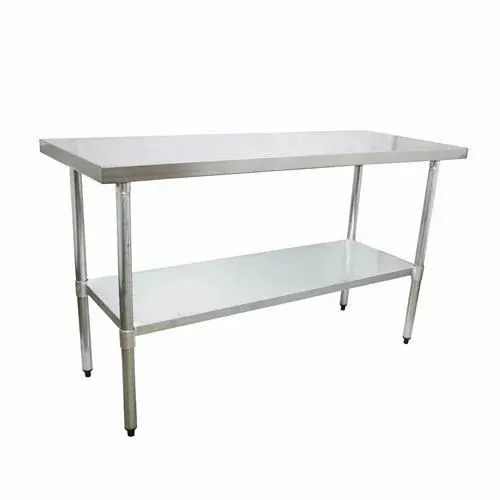
Way 6: Digital Leveling for SS Tables

Stainless steel tables in cafeterias or waiting rooms often wobble because the floor is uneven. Use a spirit level app on your phone. 

Stainless Steel table

Adjust the screw-in glides at the bottom of the legs until the table is 100% level. This prevents the “rattle” every time someone places a cup or laptop on the surface.

Way 7: Deep Mechanism Cleaning

Dust and hair are the enemies of stability. They act as abrasives in the swivel joints. 

Use a can of compressed air to blow out the “butterfly” mechanism and the swivel bearing. A clean joint is a tight joint.

Detailed Walkthrough of the Monthly Maintenance Checklist

Minutes 1-3: The Base and Mobile Elements

Start from the ground up. Flip your chair safely onto its side. Inspect the casters as mentioned in Way 2. Look for cracks in the nylon base. If you are inspecting an SS visitor chair, check the welds where the legs meet the seat frame. 

Any hairline fracture here is a sign that the chair needs professional repair or replacement from the Angel Mastergrain Furniture catalog.

Minutes 4-6: The Central Support and Seat Plate

This is the “heart” of your Monthly maintenance checklist. Situate the chair upright. Reach under and perform Way 1 (The X-Pattern tightening). 

Check the armrests; loose armrests can actually shift the user’s weight unevenly, causing the central gas lift to wear out prematurely on one side. Tighten the armrest bolts firmly.

Minutes 7-8: Lubrication and Tension Adjustment

Apply your silicone spray to the pivot points. Do not over-saturate; a single drop is usually enough. Move the chair through its full range of motion to work the lubricant in. 

This part of the Monthly maintenance checklist eliminates the squeaks that often accompany a wobbly chair.

Minutes 9-10: Surface Integrity and Final Leveling

For our designer sofas and SS tables, use a microfiber cloth to wipe down the metal. Inspect the upholstery for tears that might be hiding loose frame screws. 

Use Way 6 to ensure the piece is sitting flat on the ground. A final “stress test”, sitting in the chair and leaning in all four directions, confirms that the wobble is gone.

The Business Impact of High-Quality Maintenance

For business owners in India, furniture is a reflection of corporate standards. When a client visits your office and sits in a stable, silent SS Visitor Chair, they perceive a company that is detail-oriented and stable. Conversely, a wobbly chair can subconsciously create a feeling of unreliability.

By implementing this Monthly maintenance checklist across your entire facility, you also reduce “ergonomic downtime.” Employees who aren’t distracted by a shaky seat can focus better on their tasks. 

This is why Angel Mastergrain Furniture designs products with accessible hardware; we want you to be able to maintain your furniture with ease.

When Maintenance Isn’t Enough: Identifying Wear and Tear

Sometimes, even the best Monthly maintenance checklist can’t save a piece of furniture. If you find that a gas lift continues to sink after being reset, or if a metal frame has a visible bend, the component has reached its “end of life.” 

In these cases, attempting to “fix” the wobble with more tightening can be dangerous.

It is important to know the difference between a loose bolt and a failed part. If the internal bearings of a swivel mechanism have flattened, no amount of cleaning will stop the wobble. 

At this stage, we recommend visiting our shop to find a modern, more durable replacement that will stand up to the next several years of use.

The 10-Minute Summary

MinuteActionGoal
1-3Caster & Base AuditClear hair/debris; check for base cracks.
4-6The X-Pattern TorqueTighten seat bolts diagonally for a level surface.
7-8Hydraulic Reset“Burp” the gas lift and calibrate recline tension.
9-10Leveling & PolishAdjust floor glides and wipe SS frames.

Making Stability a Habit

A wobble is a small problem that leads to big headaches, both literally and figuratively. By dedicating just ten minutes a month to this Monthly maintenance checklist, you protect your physical health, your professional image, and your financial investment. 

Angel Mastergrain Furniture is built to the highest standards of Indian craftsmanship, but even the best tools need a little love.

Keep your tools handy, follow the 7 proven ways, and enjoy the peace of mind that comes with a perfectly stable workspace.

Is your current furniture beyond the help of a checklist? Don’t settle for a shaky seat! [Explore the Angel Mastergrain Furniture Shop] today for premium, high-stability office chairs, SS visitor seating, and designer sofas that are built to last.

Quick Recap: Your Monthly Maintenance Checklist

  • Tighten: Use the X-pattern on all 4 seat bolts.
  • Clean: Remove hair/lint from all 5 caster wheels.
  • Lube: One drop of silicone on the swivel bearing.
  • Level: Adjust floor glides on SS visitor chairs.
  • Check: Ensure the tilt-tension knob matches your weight.

Frequently Asked Questions(FAQ’s)-

1. Why is a Monthly maintenance checklist better than a yearly one?

In high-use environments, bolts can begin to loosen in as little as 15 days. A monthly check allows you to catch issues before the metal threads get stripped or the parts become permanently misaligned.

2. What is the most common cause of a wobbly office chair?

Statistically, 80% of wobbles come from the four bolts connecting the seat plate to the seat pan. People often forget these exist because they are hidden under the chair!

3. Does this Monthly maintenance checklist apply to SS Tables too?

Absolutely. While they don’t have gas lifts, the “Ways” regarding leveling and thread-locking fluid are vital for keeping stainless steel tables from rattling in busy environments.

4. Can I do this checklist without a professional technician?

Yes! We designed this Monthly maintenance checklist specifically for office managers and DIY-conscious users. It requires no specialized mechanical knowledge, just 10 minutes and a few basic tools.

5. How long should a well-maintained Angel Mastergrain chair last?With a consistent Monthly maintenance checklist, our executive chairs and SS furniture are designed to provide 5-10 years of peak performance, depending on the intensity of use.

Back to Top
Product has been added to your cart